 Autoelectrical Installation & Testing
4x4 ALTERNATORS
MOTORHOME ALTERNATORS
HGV TRUCK ALTERNATORS
PSV BUS & COACH ALTERNATORS

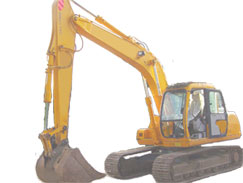
CONSTRUCTION PLANT ALTERNATORS
for
BULLDOZER
CRANE
DIGGER
EXCAVATOR
DUMPER
MIXER
LOADING SHOVEL
TELEHANDLER
INDUSTRIAL ENGINE ALTERNATORS
 CONTACT
UK Suppliers of Alternators
Motor Trade
Garages
Mechanics
Motor Factors
Farm Workshops
Agricultural Engineers
Construction Plant
Forestry Forwarders
Hire Companies
Marine
Coach and Bus
Special Vehicle Builders
Van Conversion Specialists
ALTERNATOR SUPPLY SHROPSHIRE UK
tel: 07703 558610
Is your vehicle battery charge warning light on?
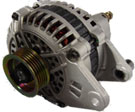
Alternator Testing
Diagnostic facilities to test many makes and models of vehicle alternators for charging output on the vehicle
or by free run bench test.
Alternator repair services include strip, test, repair and rebuild of vehicle alternators to component level.
Alternator Repair Service Shropshire
Cost effective specialist alternator repairs may include bench test or strip and test
of individual alternator components then replacement such as fitting of a diode pack,
stator, rotor, bearings or voltage regulator to get your old alternator working again.
Supply only, or supply and fitting of a complete brand new alternator or service exchange alternator unit.
Alternator repair prices
Repair of your existing alternator can offer a cheaper solution than replacing a complete unit where minor components have failed.
Many alternators fitting classic vehicles can be hard to obtain so repair may be the only option.
To purchase a complete alternator as aftermarket spare parts would be much more expensive than a mass produced factory built unit.
Minimum repair cost is normally above £50 taking account of labour.
Alternator Parts Supply
Supply of brand new oe and aftermarket alternator rebuild parts including diode rectifier pack - voltage regulator - bearings - rotor - stator - slip rings - casings - fasteners . Pleae note, alternator oe part numbers are required to source components. Many alternator parts can be sourced for next working day subject to time of order.
Alternator Fitting in Shropshire and Mid Wales
We can provide a mobile callout service for vehicle breakdown repairs including alternator supply & fitting on site where access allows subject to engineer availability in
Shrewsbury & Local Shropshire areas.
Many 12v and 24 volt automotive alternator removals and replacements can be carried out on site.
Battery test and vehicle charging system testing available.
Troubleshooting of alternator charging circuit problems
Auto electrical diagnostics wiring faultfinding and repair.
Test and repair facilities for many vehicle rotating electrics units
Alternator FAQ list
Common Alternator Wiring Terminal Letter Designations
Vehicle Alternator Function :
The automotive alternator is an alternating current (ac) electricity generation plant with rectification to direct current which provides electrical power output whilst the vehicle engine is running, to recharge one or more vehicle batteries and supply electricity for vehicle electrical systems such as lighting, wipers, air conditioning, heater motor, car audio , etc.
Vehicle alternators generate AC (Alternating current ) converted to DC (direct current) by the alternator rectifier (diode pack)
ROTATING ELECTRICS
Terminology: Vehicle Rotating Electrics refers to Alternators, Dynamos, Starter Motors, and D.C. Motors
Vehicle Alternator is generally engine driven by drive belt connected to the crankshaft pulley , or coupling to shaft drive or gear drive.
If drive belt driven correct belt tension is essential.
The alternator must be mounted securely to enable it to be driven efficiently.
Broken or loose mounting brackets can result in loss of drive belt tension and subsequent loss of alternator charging performance.
High Output Heavy Duty Alternators
Specialist applications eg Buses, Boats, Motorhomes, Support vehicles, may require higher output alternator upgrade when additional accessory loads are fitted or multiple batteries are employed
OE vehicle manufacturers calculate the power output of the alternator required for each vehicle with
regard to circuit loading and original equipment provision.
Increasing the load and power generation requirements of a vehicle electrical system may require higher capacity alternator and charging
system upgrade including cable.
Special purpose vehicles with split charge dual or more auxilliary battery systems may be fitted with
an additional alternator or battery charging management system.
Certain vehicles have both 12 volt and 24 volt alternators.
Brushless Alternators
High output heavy duty brushless alternators found on heavy commercial vehicles, buses, and military equipment benefit from extended lifespan due to lack of brushgear.
How Alternators Work
Alternators generate electrical power as alternating current (a.c.).
D+ excitation current is passed via brushes and copper slip rings to the electrical windings of the alternator rotor.
The field excitation current passing through the windings of the rotor causes a magnetic field around the rotor.
As the alternator rotor spins the magnetic field rotates.
Insulated wires forming the stator coil in the stator housing, cut the magnetic field.
Magnetic Inductance causes an electrical current to flow in the stator wires thus generating
electrical power as alternating current output. Stator coils may be connected in Star or Delta configuration.
A.C needs to be converted to direct current to allow the vehicle battery to be charged. A.C. to D.C. conversion is done by using a diode pack connected to the stator
output wires.
Alternator electrical power output is regulated by control of the input excitation field of the rotor by a voltage regulator.
Symptoms of a faulty alternator
Early signs of alternator or charging system fault may be indicated to the driver by illumination
of the instrument panel alternator or battery charge warning light.
Gradual loss of vehicle electrical power may result until the engine cuts out and fails.
Low battery voltage may mean the starter motor clicks or does not operate preventing the vehicle engine from
being started causing breakdown.
Battery light staying on ? Have the vehicle battery and vehicle electrical charging system tested. A visual check with the engine stopped should be carried out to ensure the alternator is secure and drive belt correctly tensioned. Also check for oil ,fuel or coolant leaks which may have caused the alternator to fail.
Alternator Wiring Faults
The battery charging light may illuminate if the alternator is not charging or if a wiring fault exists.
A wiring fault such as a broken wire may cause loss of power, ground, or signal at one of the alternator multiplug terminals
Fuseboard, relay plate, or ecu connection problems may also cause the battery charging system to fail.
Check all connections are tight and wires are in good condition.
Check all fuses are intact. A blown fuse may indicate a short circuit or current over loading requiring further investigation and repair.
Check all alternator heat shields are in place .
Alternator tests on the vehicle
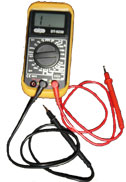
A multimeter can be used to quickly test or diagnose a failed alternator.
Measure battery voltage with the engine off using a multimeter set to dc volts range.
Start the engine and run at around 2000rpm whilst monitoring battery voltage reading
which should have increased slightly if the alternator is charging the battery.
Incorrect alternator output voltage ( alternator overcharging or undercharging ) can affect sensitive vehicle computer systems and related systems.
Typical battery voltage for a 12 volt system would be :
- Engine off : 12.5 volts
- Engine running at 2000 rpm : 13.2 to 14.6 volts at battery(regulated voltage)
- A battery voltage indicated above 15 volts with the engine running on vehicles with a standard 12v charging system often indicates a fault though vehicle manufacturers specification should be checked to verify because certain vehicle alternators may regulate charge at higher levels .
- Some modern vehicles have alternators with dynamic electronically controlled output which is affected by the embedded software in the vehicle engine control computer. These require special equipment to test and verify as output varies according to demand.
Excessive Alternator Noise
Potential causes of excess Alternator noise
Excessive drive belt tension.
Insufficient drive belt tension may cause a squealing noise.
Bearing failure.
Stator winding fault causing phase imbalance.
Component misalignment.
Noisy one way clutch pulley (chatter) may indicate that the drive pulley needs renewal.
Alternator one way clutch over run pulleys are available seperately but may require special tools to fit.
Battery Charge Warning Lamp On ? Flat battery ? Alternator not charging ?
Common causes of alternator failure are:
Broken or defective wiring to the alternator. May cause battery warning light to either stay off or stay on permanent.
Wear and tear ; Worn out brushes ,sliprings, bearing failure,
Alternator Component failure eg blown diodes , diode pack failure, voltage regulator failure, broken windings.
Excessive drive belt tension causing premature bearing failure.
Insecure mounting bolts / bracket causing insufficient drive belt tension.
Poor electrical connection causing high resistance and leading to overheating.
Electrical overload due to a defective battery or fitment of vehicle accessories, or vehicle wiring faults.
Inadequate ventilation and cooling.
Dusty working conditions (particularly for tractors combines and construction plant working in agricultural and site environments) can cause dirt and dust to be sucked in to the alternator by the alternator cooling fan, a build up of dust can block airflow causing overheating of components such as diodes and electrical windings, resulting in breakdown.
Voltage surge caused by boost starting using jump leads without surge protection. (Diode failure)
Oil, fuel or coolant leaks onto the alternator will cause premature failure and void warranty.
Water leaks on to the alternator : Water entering an air cooled alternator can cause problems particularly in Winter when at freezing temperatures the water turns to ice causing internal component damage .
Battery Specification
An incorrect battery specification may cause charging system problems where a vehicle alternator function is controlled by an electronic control unit (ecu). Some vehicles have computerised battery management systems (BMS).
Alternator lifespan and recycling
Expected lifespan of many vehicle alternators is 100,000 to 200,000 miles, dependant upon operating conditions
such as environment, temperature, driving cycle, maintenance, component age, etc.
Many alternator core units can be reconditioned, remanufactured , repaired, or recycled.
Premature alternator failure may be caused by power surge , overload or misuse.
Alternator translated : Alternateur Alternador Alternatore Dynamo Generatoren Lichtmaschine 发电机 алтернатор