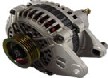
 ALTERNATORS
Alternator Parts
by mail order:
Please state all part numbers from your alternator and components if requiring repair parts
Alternator Stators
Rectifier & Alternator Diode Packs
Alternator Rotors
Slip Rings
Brushes
Brackets and Casings
Bearings
Alternator Pulleys
Alternator Repair Tools
Alternator Test Benches
Please quote any alternator manufacturers part numbers if ordering repair components
Cable and Wiring Products
Alternator Parts supplied
to:
Autoelectricians
Autoelectrical Rebuilders
Repair Garages
Fleet Workshops
Agricultural Engineers
HGV Repairers
Marine engineers
Motor factors
Classic Car Restorers
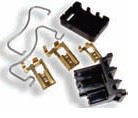
Please state all part numbers from your alternator and components if requiring repair parts
Please quote any alternator manufacturers part numbers if ordering repair components
Alternator Parts supplied
to:
Autoelectricians
Autoelectrical Rebuilders
Repair Garages
Fleet Workshops
Agricultural Engineers
HGV Repairers
Marine engineers
Motor factors
Classic Car Restorers
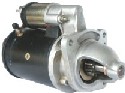 STARTER MOTORS
 CONTACT
Alternator Parts Supply UK
for Car, Van, Motorhome ,4x4,
HGV Commercial Vehicle,
Quarry & Construction plant,
Agricultural Tractor, Combine
Canal boat , Industrial Generator engine
Supplier of automotive alternator components
Please email sales(at)autoelectrics.net or use the enquiry form below for replacement alternator mail order prices:
Part Numbers from your alternator label are always required.
Completion of all form fields is not mandatory but all information helps.
Please include any part numbers to assist alternator identification
Common Alternator Wiring Terminal Letter Designations
B+ , 30, Battery Positive
S, M, 2, Battery Voltage Sense
B- , 31, D-,GRD Battery Negative
F, DF , 67 , FLD , EXC, Field/Rotor
D+, 61 , L , IND, Charge Warning Lamp
IG, 15 , R , Ignition
N, C, Central Point
W, P, STA, Tachograph rev counter (stator single phase tap AC output)
D Dummy
DFM , FR, SIG, C, M, Digital Field Monitor duty cycle output for computer control unit monitoring.
LIN Local Interconnect Network bi-directional control to control module
COM bi-directional digital communication with control module
Please Check the manufacturers instructions for specific application of wiring terminal designation.
Typical Part No format
by manufacturerBosch - ten digit typically starting 0 123 or 0 986 0124
CAV AC...
Delco DRA...
Hella CA...ir
Hitachi LR...
Lucas LRA... or LRB...
Mitsubishi A2T... or A5T...
Valeo A..VI... or A..(letter)...
Alternator Removal
The alternator will normally have to be removed from the engine and dismantled to replace parts. The voltage regulator can sometimes be renewed in position.
The vehicle alternator is normally bracket mounted to the engine block. Not always accessible. Sometimes other components such as airconditioning compressor and power steering pump may have to be removed before the alternator can be accessed.
Disconnect battery before attempting alternator removal
Often the alternator pulley is belt driven via a v belt or ribbed belt connected to the crankshaft pulley . In a few instances the alternator may be shaft driven or gear driven. The alternator must be mounted securely to enable it to be driven efficiently. Broken or loose mounting brackets can result in loss of drive belt tension and subsequent alternator breakdown.
Premature alternator failure can be caused by
oil and fluids leaking on to the unit
which may damage component insulation and brushes. Trace the source of any fluid leaks and repair prior to fitment of reconditioned alternator
Build up of dust and debris causing loss of cooling air flow which may cause an air cooled alternator to overheat
Alternator component function
Alternator Rotor
The alternator ROTOR spins as it is driven from the engine. The ROTOR is an electromagnet which when energised by 'field current' creates a magnetic field.
Alternator Stator
The alternator stator normally mounts between alternator casing halves, and consists of a soft iron laminated core around which reasonably heavy gauge copper wire is wound to form usually three windings connected in Star or delta formation. Charging voltage output of the alternator is generated in the stator by the effect of a rotating mahnetic field produced from the rotor.
Alternator Excitation
Rotor field current is supplied via internal or external vlotage regulator and brushes to EXCITE the rotor so the rotor magnetic field is created. Without excitation current there will not be a magnetic field. Some alternators are SELF-EXCITED, this means after the rotor is initially excited a wire connected to the stator taps some of the power generated to keep the rotor excited and power generation in progress whilst the rotor is spinning.
Brush pack
The brush pack consisting of housing, springs, and carbon brushes form the means of connecting the spinning rotor slip rings to the excitation power source.
Individual brushes may be ordered seperately for brush pack repair but we generally supply complete brush pack assemblies due to min order value.
Alternator Voltage Regulator Operation
Alternator DC voltage output level must be slightly higher than battery voltage to allow the battery to charge.
Rotor magnetic field strength is proportionally controlled by regulating excitation current and voltage.
This excitation control is used to regulate the alternator output by means of the Voltage regulator.
Smart alternators may contain a voltage regulator which communicates serial data with other vehicle control units.
DFM : The duty cycle of the excitation current can be reflected as a feedback signal to measure
the amount of alternator capacity being used via the DFM signal terminal (DF Monitor).
Other voltage regulator terminals may include COM LIN BSS
Rectifier Diodes (Diode Pack)
Alternating Current (AC) is generated by the alternator stator producing a sine wave output for each phase.
Unfortunately AC cannot be used to recharge the vehicle battery so has to be converted to DC.
The process of converting AC power to DC power is known as rectification.
Power rectification is done by the Diode pack (a diode acts like a one way valve in an electrical circuit).
Car alternators are Three Phase AC generators with rectification to DC.
The Diode pack has a secondary function when the ignition key is off to prevent the power draining from the battery via the alternator windings which would cause the battery to discharge.
Symptoms of a faulty alternator ?
The first sign of alternator charging system fault is often indicated to the vehicle driver by illumination of the battery charge warning light on the dashboard instrument cluster whilst the engine is running, followed by
gradual loss of electrical power until the engine cuts out and fails causing breakdown.
The discharged battery can prevent the vehicle engine from being started.
Basic On Vehicle Charging System Tests
Test the vehicle battery using a load or capacity tester eg Bosch 121
A visual check with the engine stopped should be carried out to ensure the alternator is secure and drive belt correctly tensioned. Also check for oil ,fuel or coolant leaks which may have caused the alternator to fail.
Check all connections are tight and wires are in good condition.
Check all heat shields are in place .
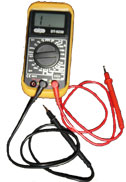
A technician's quick check for a failed alternator on a basic vehicle charging system is to measure battery voltage with the engine off using a voltmeter. Start the engine and run at around 2000rpm whilst monitoring battery voltage which should have increased slightly if the alternator is charging the battery. B+ terminal voltage at the alternator should also be checked.
Typical battery voltage for a 12 volt system :
Engine off without residual load : 12.5 volts
Engine running at 2000 rpm : 13.2 to 14.6 volts at battery (regulated voltage)
Battery voltage indicated above 15 volts with the engine running on a standard 12v charging system often indicates a fault though vehicle manufacturers specification should be checked to verify.
Incorrect alternator output voltage ( alternator overcharging or undercharging ) can indicate a faulty voltage regulator. Incorrect alternator output voltage can affect sensitive vehicle computer control systems and related systems, for example erratic automatic transmission shift pattern.
Smart Alternators
Many modern vehicles have 'smart' alternators with dynamic electronically controlled output affected by embedded software in the vehicle engine control computer or battery management system.
Smart Alternators may contain a voltage regulator assembly with serial data link to communicate with other vehicle control modules.
Accurate diagnosis of Smart Alternators requires specialist test equipment to verify alternator output. Voltage regulator operation is controlled by complex computer software to match load demand, battery temperature and condition.
Alternator Noise possible causes:
Excess drive belt tension
Insufficient drive belt tension
Bearing failure , bearings worn ad noisy.
Stator winding fault causing phase imbalance
What causes Alternator output to fail ?
Common causes of alternator failure are:
Broken or defective wiring to the alternator.
Wear and tear ; Worn out brushes ,sliprings, bearing failure, diode pack failure.
Excessive drive belt tension causing premature bearing failure.
Insecure mounting bolts / bracket causing insufficient drive belt tension.
Poor electrical connection causing high resistance and leading to overheating.
Electrical overload due to a defective battery or fitment of vehicle accessories, or vehicle wiring faults.
Inadequate ventilation and cooling possibly caused by fitment of vehicle body kits.
Voltage surge caused by boost starting using jump leads without surge protection. (Diode failure)
Oil, fuel or coolant leaks onto the alternator.
On modern alternators controlled by an electronic control unit an incorrect battery type may cause problems.
Alternator Test Facilities
We have equipment for on vehicle alternator testing and fault find or to remove from site for strip down bench testing and repairs.
We supply competitively priced outright brand new or service exchange alternators for many makes of vehicle
We offer a service exchange unit policy on most alternator , dynamo , dynastarter and starter motor units.
In cases where a complete alternator is no longer available we may be able to source components and repair your existing vehicle alternator.
Alternator Warranty
Unit warranty is subject to original suppliers standard terms & conditions.
Warranty is affected by extreme operating environments, particularly oil and fuel leaks onto an alternator, and excessive electrical loads.
Alternator Repair Recondition Supply Fitting
We can supply & fit many makes of vehicle alternator in the Shropshire local area to suit your automotive charging system including replacements for
Alfa romeo,AMC,Audi,AVF,BMW,Bosch,Butec,Cajavec,Carrier,Caterpillar,
CAV,Chrysler,Citroen,Cummins,Daihatsu,Delco remy,Ducellier,Efel,Elmot,Femsa,Fer,Fiat,Ford,GM,Halla,Hella,Hitachi,
Honda,Hyundai,Iskra,Isuzu,Iveco,John Deere,Kia,Komatsu,Kubota,Lada,Lucas,Magneti Marelli,A127,Magneton,
MAN,Mando,Massey Ferguson,Mazda,Mercedes Benz,MGF,Mitsuba,Mitsubishi,Monark,Motorola,Nikko,Nippondenso,
Nissan,OMC,Opel,Paris Rhone,Perkins,Peugeot,Poong sung,Prestolite,Real,Renault,Rover,214,Saab,Scania,SEV,SJCE,Skoda,Subaru,
Suzuki,Thermoking,Toyota,Unitedtechnologies,Valeo,Vauxhall,Astra,Corsa,Vectra,Zafira,Volvo,VW,Yanmar.
Please quote any reference numbers to help identify parts you may require.